

Summary
Successful hiring in Eastern Europe depends on more than access to talent. Companies building and scaling a product need to understand where to source candidates, how to evaluate real working signals, and how regional differences affect collaboration, contracts, and onboarding. The right approach emphasizes clear expectations, practical evaluation, and long-term integration into the development process.
Eastern Europe has built a reputation for reliable remote software development. Developers in Serbia, Poland, Romania, Bulgaria, Ukraine, and neighboring countries are known for solid technical skills, direct communication, and a working style that fits well with European and US-based product-driven companies.
Still, success is not automatic. Results depend on knowing when this region is the right fit, where to look for the right people, and how to approach hiring with clear expectations. If you skip these steps, you risk losing time to misalignment and repeated hiring cycles, often resulting+ in slow onboarding, unclear ownership, or the need to re-hire months later.

Hiring in Eastern Europe for the first time?
Book a call to understand how hiring in Eastern Europe works in practice and what to expect before making your first remote hire.
Why So Many Companies Hire Remote Developers in Eastern Europe
The demand for experienced developers has outpaced local supply in many European and US markets. As a result, more startups are turning to remote developer hiring to stay competitive without slowing down product delivery. Eastern Europe has become a natural choice in this shift, particularly for companies that need to hire quickly without building a large internal recruiting function.

✔ Strong technical education and practical problem-solving skills
✔ A large and scalable developer talent pool
✔ Cost efficiency without sacrificing quality
✔ High English proficiency and direct communication
✔ Favorable time zone overlap
✔ An ownership-driven engineering mindset
Together, these factors make it easier for you to hire developers who can contribute quickly without requiring heavy oversight or long ramp-up periods.
Strong Technical Foundations
One of the primary reasons is the talent quality. Developers in Eastern Europe are typically educated in strong technical programs with a solid foundation in computer science, engineering, and mathematics. This background shows up in practical problem-solving skills, not just familiarity with frameworks or tools, which is especially valuable when developers need to work independently on real product challenges, such as debugging production issues or making implementation decisions without constant guidance.
A Large and Growing Talent Pipeline
Each year, tens of thousands of new IT graduates enter the regional workforce, reinforcing the pipeline of technically trained developers. Additionally, independent European developer skill rankings consistently place Eastern European countries at the top, with Slovakia, the Czech Republic, Hungary, Poland, and Serbia occupying the five highest positions.
Eastern Europe also offers scale. Industry estimates commonly place the region’s developer population at over one million professional software developers, with countries such as Poland, Romania, Serbia, Bulgaria, and Ukraine representing some of the largest and fastest-growing talent pools in Europe. This depth makes it possible for you to hire across multiple roles and seniority levels without being limited to a narrow local market, whether you need to add a second engineer, replace a role, or hire for a different stack later on.
Cost Efficiency Without Compromising Reliability
Cost is an important factor, though it is rarely the only one. Hiring remote developers from Eastern Europe is generally more affordable than hiring in Western Europe or the US, while still offering comparable technical quality. Rates vary by country, seniority, and stack. You’ll find that you can access experienced developers at a lower total cost without sacrificing reliability or communication.

For example, market salary data from Glassdoor indicates that median Full-Stack Developer salaries in Serbia are several times lower than equivalent roles in the United States, reflecting meaningful cost efficiency for product companies. While exact figures vary by source, seniority, and market conditions, the overall gap remains substantial.
Communication and Time Zone Alignment
Developers in this region generally work comfortably in English, communicate directly, and are used to collaborating with international teams. For product-driven companies, this reduces friction in day-to-day work and makes remote collaboration more predictable. Indexes consistently rank Eastern European countries among the higher tiers of English proficiency globally, often ahead of several Western European markets.
Time zone alignment also plays a role. Eastern Europe overlaps well with both Western Europe and, partially, North America. This makes real-time collaboration, sprint planning, and feedback cycles easier compared to regions with larger time differences.
An Ownership-Driven Working Mindset
Many founders value the working mindset they encounter here. Developers are often expected to question requirements, suggest improvements, and take ownership of outcomes rather than simply execute tasks, often surfacing risks early, proposing alternatives, or clarifying requirements before issues escalate or lead to rework. For product-focused companies, this approach tends to produce better results than purely transactional remote work.
Is Eastern Europe the Right Region for Your Company?
Eastern Europe can work well for a wide range of startup and mid-size companies, but like any region, it tends to fit certain working patterns better than others. Understanding these patterns helps set realistic expectations before you start hiring.
Remote developers in this part of Europe are commonly involved in ongoing product work rather than short, one-off tasks. If you collaborate continuously, iterate on features, and maintain codebases over time, you will find the region a good match for this style of work.

Compared to regions where remote work is often structured around task execution, Eastern Europe more commonly supplies developers who are comfortable participating in technical discussions, questioning assumptions, and contributing to implementation decisions, which tends to lead to better continuity and less rework over time.
In practice, Eastern Europe works best when remote developers are integrated into the development process. Clear ownership, visibility into decisions, and consistent feedback help you get the most value from long-term collaboration.

Still unsure if this region fits your needs?
Schedule a free consultation to discuss your product, company structure, and collaboration style before making a hiring decision.
Where to Find Remote Developers in Eastern Europe
You can find remote developers in Eastern Europe through various channels:
Direct outreach (communities and professional networks)
Referrals (recommendations from other founders or CTOs)
Job platforms (general and role-specific)
Hiring partners (specialized remote hiring firms)
These channels mainly differ in how quickly they surface candidates, not in the quality of developers they produce. This difference is amplified by strong local developer communities and referral-driven hiring, which is why companies often work with local partners, such as FatCat Remote, who already operate inside these networks rather than relying solely on open job platforms.
Regardless of where candidates are sourced, hiring success is determined by how you evaluate them. Clear criteria, early signal checks, and a focused pipeline help in increasing hiring efficiency without sacrificing decision quality. They also make the transition from sourcing to hiring far more reliable, filtering out candidates who interview well but struggle in real work.
How to Hire Remote Developers in Eastern Europe
It works best when the process is simple, explicit, and biased toward real work signals:
Start by defining the role in practical terms. Instead of a generic job description, clarify what the developer will work on in the first three months. This includes the type of tasks, level of ownership, expected availability, and how progress will be evaluated. Clear inputs here prevent mismatched expectations later.
Use an initial screen to assess communication and reasoning before a deep technical evaluation. In Eastern Europe, this early screen is particularly useful for confirming English proficiency and clarity of communication, as most developers are comfortable working in English but vary in how directly they express uncertainty, trade-offs, or constraints.
Technical evaluation should focus on how candidates think, not how many tools they list. Ask them to walk through a real problem they solved, explain trade-offs they made, or review a simplified scenario similar to your actual work. This reveals far more than abstract algorithm questions. If you want confidence in technical hiring without having to run deep technical interviews yourself, FatCat Remote can step in and evaluate candidates through practical, real-world scenarios.
Introduce a short, paid trial before making a long-term commitment. The goal is not to test knowledge, but to observe working style. Short paid trials are widely accepted in Eastern Europe and tend to surface alignment issues early, particularly around ownership, communication pace, and expectations around autonomy, deadlines, and communication pace.
Once a decision is made, onboarding should be structured but lightweight. Provide access, documentation, and a clear point of contact. Define priorities for the first weeks and establish how communication and feedback will work. Early clarity here reduces friction and speeds up contribution.
Throughout the process, keep momentum. Long gaps between steps increase candidate drop-off and force rushed decisions later. If you move decisively and communicate clearly, you’re more likely to secure stronger candidates with less effort.
Checklist For Hiring Remote Developers in Eastern Europe
Hiring in Eastern Europe tends to be most successful when you follow a repeatable process rather than improvising at each stage, especially if this is your first time hiring in the region. The checklist below summarizes the practical steps that reduce misalignment, shorten hiring cycles, and help decision makers build long-term collaboration instead of short-term fixes.
Define the first 90 days of work clearly, not just the role title
Decide upfront which countries you are hiring from
Use sourcing channels that reflect local hiring behavior
Set evaluation criteria before reviewing candidates
Check English clarity and directness early
Focus technical interviews on real decisions and trade-offs
Use a short, paid trial tied to actual work
Onboard with clear priorities and ownership
Align early on feedback and communication cadence
Plan for country-specific legal and contracting requirements
Navigating Country-Specific Differences
Eastern Europe is not a single hiring market. Each country operates under its own labor laws, contracting standards, tax rules, and compliance requirements. What works in Serbia may not directly translate to Poland, Romania, or Bulgaria.

Companies hiring across multiple countries often need to account for differences in employment classification, contract structure, notice periods, and local expectations around remote work. These factors sit alongside technical evaluation and can influence hiring speed and long-term stability, and often add operational overhead for companies managing this internally.
Some companies choose to manage this complexity internally as they scale. Others work with local hiring partners who already operate within specific markets and handle sourcing, compliance, and onboarding across borders. The right approach depends on hiring volume, timeline, and how much operational ownership the team wants to maintain.
Why the Balkans Stand Out
Eastern Europe includes many distinct hiring markets, and the Balkans represent one of the strongest among them. Hiring developers across this region comes with its own realities, from where experienced engineers actually look for new roles to how interviews, trials, and onboarding are typically handled.
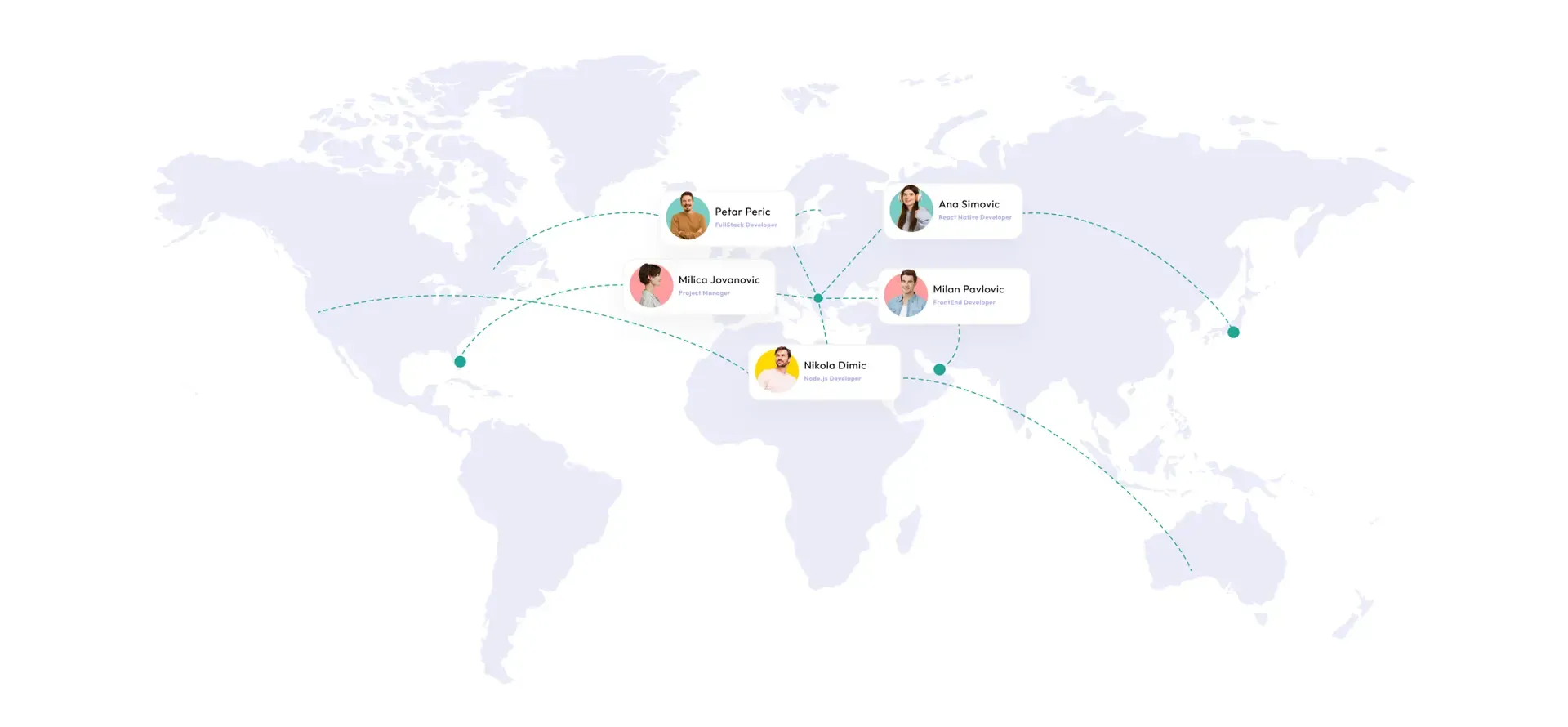
Most Balkan countries operate in the UTC+1 time zone, which makes collaboration easy for European teams and workable for North America. Many experienced developers already work remotely with international companies, so habits like documentation, clear updates, and consistent delivery are in place from day one. English is widely used in professional settings, which keeps discussions direct and reduces unnecessary back-and-forth during planning and implementation.
FatCat Remote works specifically with the Balkan developer ecosystem, helping growing companies access vetted developers, run structured hiring processes, and move from initial sourcing to onboarding without having to learn these local dynamics from scratch.
-1.png&w=3840&q=75&dpl=dpl_ChbMTEvrWxbg99U1d2kVvsdHwLw5)
Want help hiring remote talent in Eastern Europe?
Get matched with vetted remote developers in Eastern Europe and start building your team with confidence.
Conclusion
Hiring remote developers in Eastern Europe works best when you focus on clarity, consistency, and real collaboration rather than volume or shortcuts. The Balkans, in particular, offer a strong pool of engineers suited for long-term product work. With the right expectations and a locally grounded approach, partners like FatCat can help you turn remote hiring into a predictable and sustainable part of your development process.
Share this article: