How we vet candidates before you meet them
Every developer in our network goes through a structured vetting process that evaluates technical ability, communication, and real-world collaboration. The result: you meet a small number of candidates who are worth your time.
Summary
Many hiring platforms claim to provide “vetted developers.” In practice, that often means a resume check and a coding test.
We take a different approach.
Every developer in the FatCat Remote goes through a multi-stage evaluation designed to test how they actually work in a real product environment.
The goal is simple: When you meet a candidate, they’re already capable of delivering in a real environment.
What most vetting processes miss
Many hiring platforms rely on:
resume screening
automated coding tests
keyword filtering
The result?
Developers who can pass tests, but struggle in real product environments.
Startups don’t need theoretical knowledge. They need engineers who can:
understand messy requirements
communicate clearly
make practical technical decisions
move a product forward
That’s what our vetting process focuses on.
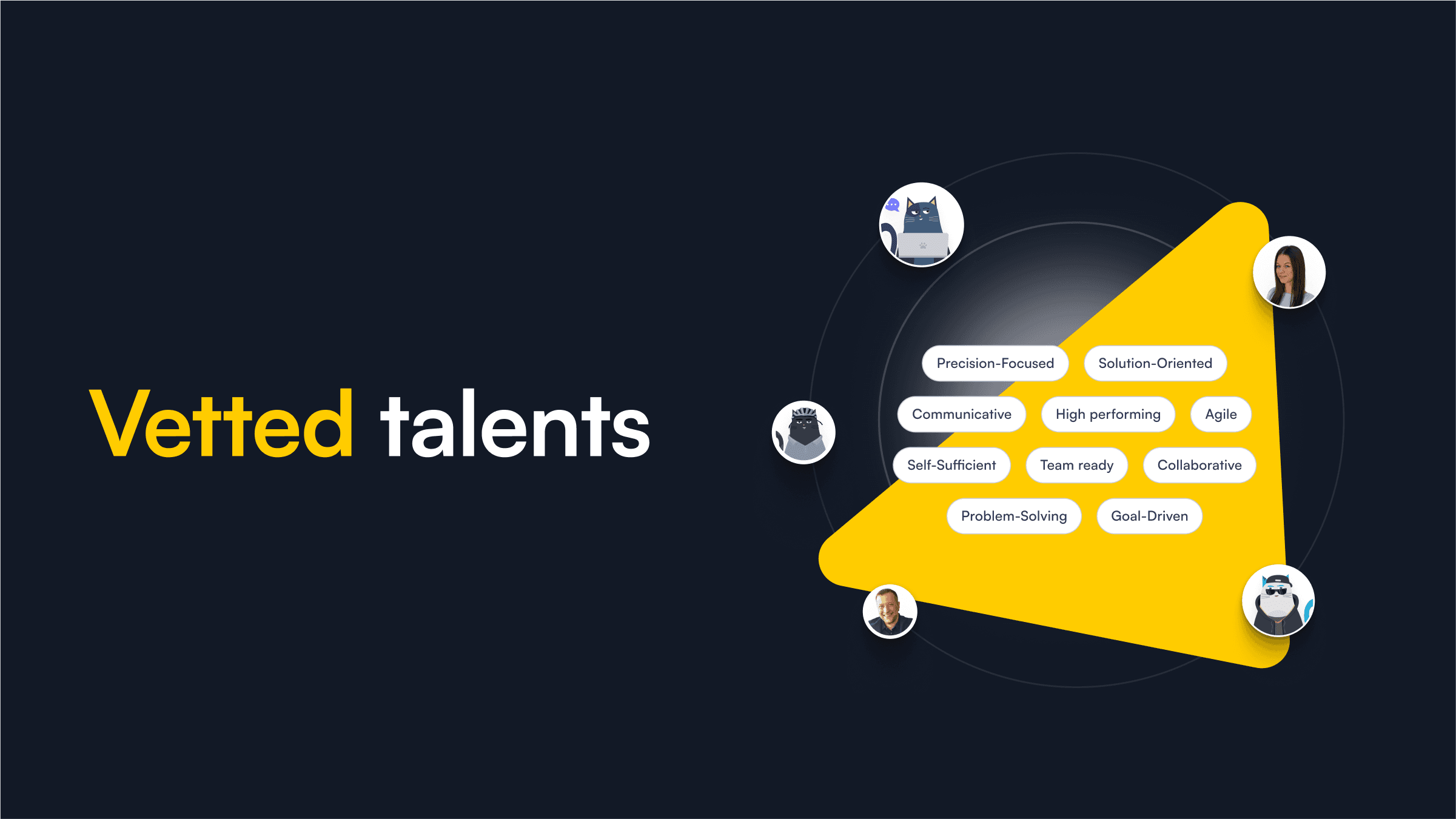
What we actually evaluate
We assess candidates across five critical areas.
1. Technical execution
We evaluate candidates using real-world scenarios, not just familiarity with specific frameworks. We want to see how someone:
💡 design practical solutions
💡 handle problems independently
💡 writes code another engineer can maintain
2. Problem-solving
Strong engineers don't just produce correct answers. They propose alternatives and know when a simpler solution is better.
We look at how candidates break down complex problems, evaluate trade-offs, and reason about technical decisions.
3. Communication & English
On a remote team, unclear communication is a product risk. We check whether candidates can:
💡 explain a technical decision to a non-technical founder
💡 collaborate asynchronously
💡 give structured async updates
💡 work comfortably in English
Clear communication is often the difference between a developer who codes well and one who actually works well in a remote product team.
4. Remote work readiness
Technical ability alone doesn’t guarantee someone will work well without daily structure. That’s why we evaluate both during the vetting process. We filter for the ones who do. We look for engineers who demonstrate:
💡 ownership
💡 self-direction
💡 reliability in distributed teams
5. Responsible AI usage
AI tools are becoming part of everyday development.
💡 Used well, AI can improve productivity and reduce development time.
💡 Used poorly, it can introduce fragile code and technical debt.
We evaluate how engineers use AI in their workflow, ensuring they use AI effectively without compromising product stability.

Want to hire vetted remote talent?
Get matched with qualified remote talent quickly and start growing your team with confidence.
Our 5-step vetting process
Application screening
Role-specific technical assessments
Communication & soft skills evaluation
Pair programming session
Ongoing performance monitoring
How our vetting process reduces hiring risk
Bad hires don't just cost money. They cost months and sometimes the project itself.
Our process is designed to catch three specific problems before you ever meet a candidate:
1. Misrepresented seniority
Developers who claim experience but struggle in real projects.
2. Communication gaps
Engineers who are technically strong but difficult to work with.
3. Costly mis-hires
Bad habits that create expensive cleanup later.
Conclusion
Our vetting process is designed to reduce hiring risk before you ever meet a candidate.
You still make the final call. But by the time you're meeting candidates, the risky ones are already gone.
Share this article: