Best Countries to Hire Remote Developers in 2026
Finding the best countries to hire remote developers is no longer about chasing the lowest hourly rate. Companies that hire successfully today focus on senior talent, clear communication, and the ability to build remote teams that actually work long term.

Vladan Ćetojević

Summary
Remote hiring has matured. Some countries consistently produce developers who are comfortable working in distributed teams, communicating asynchronously, and contributing beyond assigned tasks. This guide looks at where those developers are most commonly found and why certain regions perform better than others.
Remote work is no longer new, and neither is hiring across borders. What has changed is how companies evaluate remote talent and the markets they hire from. Experience, reliability, and team fit now matter far more than raw availability or cost.
The countries that stand out today are those where developers have real exposure to international teams, strong communication habits, and a track record of working remotely without friction. These are the factors that increasingly define successful remote hiring.

Hire remote developers without the guesswork
FatCat Remote connects companies with pre-vetted remote developers from proven hiring markets, focusing on seniority, communication, and long-term collaboration.

When companies search for the best country to hire remote developers, they are usually not looking for a single universal winner. In practice, “best” comes down to how smoothly developers can integrate into an existing company and operate without friction.
In established remote hiring markets, a few patterns tend to repeat:
Remote work is already a standard way of operating
Developers have experience working with international companies
Communication is clear and reliable in day-to-day work
Expectations around quality and accountability are aligned
This guide uses “best” to describe countries that consistently support long-term collaboration, not short-term cost optimization.
Best Countries to Hire Remote Developers
Companies that hire internationally often return to the same countries because they know what to expect. These markets have proven themselves over time through stable talent supply, strong engineering culture, and familiarity with global work standards.
The countries below are widely used by companies building remote development capacity and are recognized for reliability rather than novelty:
Serbia
Serbia has rapidly become one of the go-to destinations for companies wanting to recruit remote developers with strong engineering fundamentals and real experience working with international partners. The country’s information and communication technology sector now employs over 115,000 people, supporting a growing base of software engineers and ICT specialists.
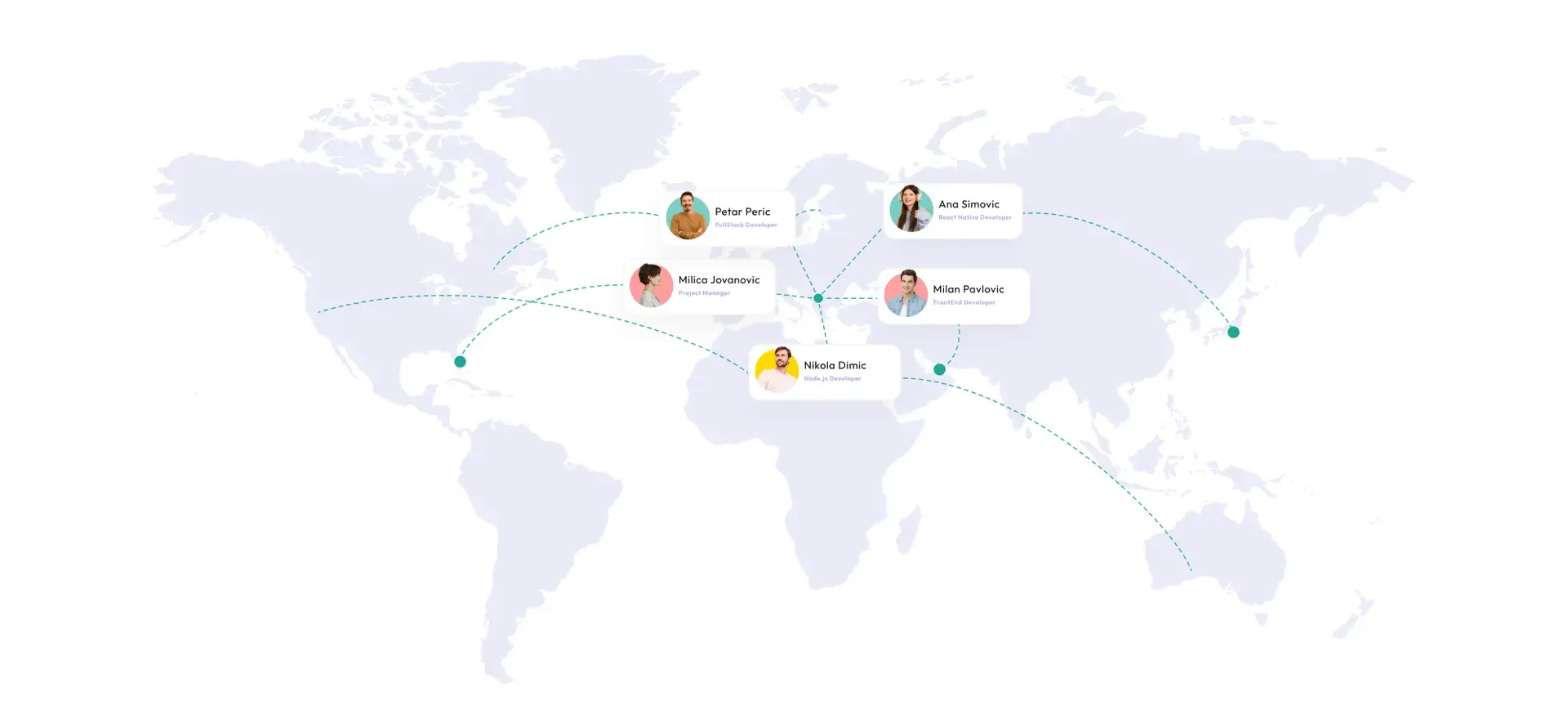
Serbia’s developer community is supported by a robust STEM education system and a tech ecosystem that attracts global investment from companies like Microsoft, Cisco, and IBM. English proficiency tends to be high among tech professionals, helping facilitate smooth asynchronous and real-time collaboration with companies abroad.
For companies focused on reliable delivery rather than just cost, Serbia offers a blend of technical depth, communication skills, and cultural alignment, making it a compelling remote hiring option in Eastern Europe.

Hire remote developers in Serbia
FatCat Remote works closely with senior developers in Serbia who have experience working with international companies and long-term remote engagements. We focus on matching companies with developers who integrate quickly, communicate clearly, and contribute beyond assigned tasks.
Poland
Poland is often chosen by companies that need a large, dependable pool of remote developers without surprises. The market is mature, hiring processes are well understood, and it’s relatively easy to find engineers with experience on complex, long-running products.
Polish developers are frequently involved in backend-heavy systems, fintech platforms, and enterprise software. They are comfortable working within structured environments and distributed company setups. For companies that value stability, technical rigor, and EU time zone alignment, Poland offers a predictable hiring environment.
Romania
Romania attracts companies looking for solid engineering talent without the pricing pressure found in more competitive EU markets. Many developers have already worked remotely for international companies, which reduces onboarding friction.
The local talent pool is commonly used for full-stack roles, cloud infrastructure, and enterprise applications. Communication is generally smooth, and collaboration with both European and North American companies is straightforward. Romania works well for companies seeking a balance between capability, availability, and cost.
Ukraine
Ukraine is known for producing developers with strong problem-solving skills and deep technical focus. Even under difficult circumstances, the tech sector has remained operational, and many developers continue to work in long-term international engagements.
Companies often hire Ukrainian developers for backend development, architecture, and technically demanding roles. They are used to asynchronous work, clear documentation, and ownership-driven delivery. Ukraine is a good fit for companies that prioritize engineering depth and resilience.
Brazil
Brazil is frequently chosen by companies that need close working-hour overlap with the United States. The local tech ecosystem is large and diverse, with many developers already experienced in nearshore collaboration.
Brazilian developers are commonly hired for frontend work, product-focused engineering, and DevOps roles. Real-time communication is easier than with more distant regions, and iterative workflows tend to work well. Brazil is a practical option for companies that rely on frequent feedback and collaboration.

Not sure which country fits your needs?
If you’re still weighing options or comparing regions, FatCat Remote offers a free orientation to help companies choose the right hiring market based on their goals, team structure, and budget.
Hiring Remote Developers in Practice
Once companies identify the right hiring markets, the next challenge is execution. This is where many otherwise good hiring decisions fall apart. Remote hiring introduces different dynamics around communication, ownership, and collaboration, and these need to be addressed deliberately.
In practice, successful remote hiring is less about speed and more about structure. Companies that approach it with clear models, realistic screening, and thoughtful onboarding tend to build stable relationships rather than short-term fixes.
Hiring Models That Actually Work
Remote hiring works best when the hiring model matches how a company already operates. Problems usually start when companies copy approaches that look good on paper but don’t fit their internal workflows or decision-making style.

For long-term product development, dedicated developers who are fully integrated into the company tend to perform better than short-term or rotating resources. This setup allows developers to build context, take ownership, and contribute without constant supervision. For clearly defined or time-bound work, project-based or milestone-driven engagements can also work well, provided expectations are set early and remain stable.
Gallup’s State of the Global Workplace 2025 found that only 27% of managers worldwide are engaged at work, a key driver of overall team performance. Hiring models that promote ownership and accountability help prevent disengagement from spreading across remote companies.
Companies that succeed with remote hiring usually decide early whether they need extra hands to execute tasks or developers who will own parts of the product long term. When that expectation is clear, the hiring model naturally falls into place and is much easier to manage.
Vetting and Screening for Senior Talent
When hiring across different countries, vetting needs to account for how senior talent is distributed in each market. Some countries have a deep pool of senior developers who are used to long-term ownership, while others skew more toward execution-focused roles within structured processes.

Companies often run into problems when they apply the same screening expectations everywhere. In markets like Serbia, Poland, or Ukraine, senior developers are typically involved in architectural decisions and product thinking. In larger talent markets such as India, strong seniors exist, but additional filtering is often needed to separate true seniority from role inflation.
SHRM’s 2025 Talent Trends report shows that 69% of organizations still struggle to recruit for full-time roles, even after post-pandemic corrections. This highlights why screening for real seniority and decision-making ability matters more than relying on titles or resumes alone. Hiring trends in 2026 further confirm these needs.
Effective screening adapts to the hiring market. It focuses on decision-making ability, communication clarity, and prior experience working inside international companies. When vetting reflects how seniority actually shows up in each country, companies avoid mismatches and hire developers who fit both the role and the working environment.
Onboarding and Long-Term Collaboration
Strong onboarding sets the tone for how remote developers will work long term. Regardless of country, developers integrate faster when expectations around ownership, communication, and delivery are made clear from the start.

Simple things matter most. Clear access to documentation, defined points of contact, and early alignment on priorities reduce friction and prevent confusion later. Companies that treat onboarding as a one-time checklist often struggle, while those that view it as a short transition period see better long-term results.
Atlassian’s State of Teams 2025 report found that 1 in 2 knowledge workers say teams unknowingly work on the same things. Clear onboarding and shared context help prevent duplicated effort and support more consistent long-term collaboration.
Sustainable collaboration comes from consistency. When remote developers know what is expected, how decisions are made, and how feedback flows, location becomes far less relevant and working relationships remain stable over time.
-1.png&w=3840&q=75&dpl=dpl_ChbMTEvrWxbg99U1d2kVvsdHwLw5)
Hire remote developers with confidence
Work with vetted developers from proven hiring markets, matched to your company’s needs and long-term goals.
Conclusion
Choosing the best countries to hire remote developers is less about finding a universal winner and more about aligning talent, working style, and long-term expectations. Companies that approach remote hiring with clarity tend to build stronger, more resilient development teams regardless of geography.
When country choice, hiring model, and execution are aligned, remote developers stop feeling remote and start functioning as a natural extension of the company.
Share this article: